
Follow the land lines
IMPORTANT *please read*

Humans have always searched for inner and outer maps or frameworks to help them navigate the world.
~ Jake Farr
There are invisible lines crisscrossing the earth. The equator, longitude and latitude may be the first that come to mind from your school geography days. But there are so many others like the Wallace Line which bisects Indonesia. This line marks a sharp transition in flora and fauna between those species associated with Asia such as monkeys and those associated with Australia such as marsupials. Or the Qinling-Huaihe line that divides the subtropical humid south of China from the dry temperate north.
There are invisible lines not far from where I grew up that are manmade, like the line in Detroit signified by 8 Mile. While physically 8 Mile is just a road, it’s also an invisible line that still racially segregates the city, a lingering reminder of the past and how it continues to seep into our present.
There are lines drawn by both man and earth that spiderweb across the land. And they are ever changing. As climate shifts, nature’s lines move. As humans shift, we redraw those lines too. These invisible layers are shaping how life exists here on earth in so many different ways. They are studied by scientists, geographers and ethnographers to understand how culture, evolution, governments, and so many other things form and develop.
But when they study these lines, they look at how they divide. They notice a line and they want to understand what is on one side and what is on the other. They don’t bother to question where the line begins and where it ends. There are many more subtle lines that often go unnoticed.
You might call them ley lines. These invisible lines were originally proposed in the 1920’s by an archaeologist as alignments that directly connected places such as prehistoric sites and influential landmarks.
Truthfully there were a lot of logistical errors in the original theory of ley lines that was shunned by the scientific world. But something about the idea of another layer of reality hiding just beneath our own intrigued the public. People set off into the countryside with no clear destination in mind, searching for something they couldn’t quite explain.
In the 1960’s the science of ley lines evolved into more mystical realms by various writers who suggested these are actually energetic lines which converge at points of high vibration. The journey continued in the hopes of rubbing up against a deeper mystery right below our feet.
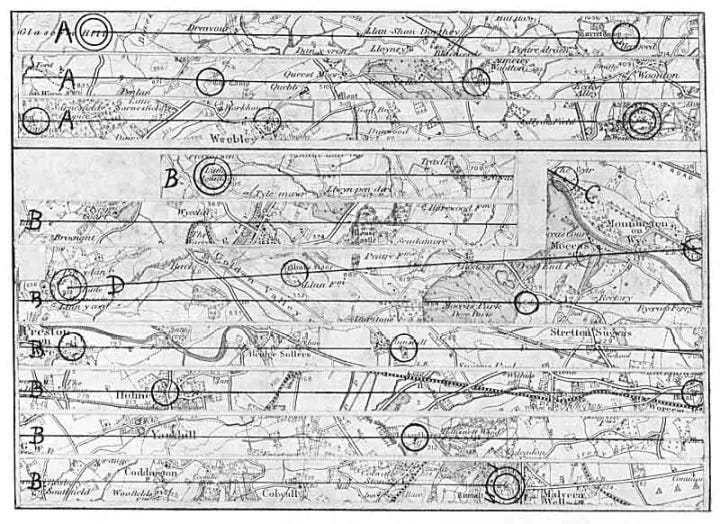
Yet ley lines existed before the 1920’s. In Irish folklore, you will hear about the fairy paths that are eerily similar, connecting sacred sites such as the holy hawthorn tree or a stone circle. Half way around the world you’ll hear them called dragon lines in China, spirit lines or ceques from the Incas, or the mystical songlines of the Aboriginal people of Australia which crisscross both land and sky.
Folklore from these cultures tells us they’re not just lines, but paths to be followed, to tread with devoted feet from one sacred place of belonging to another. The truth of whether ley lines are “real” or not is irrelevant. They are simply a placeholder for something much older.
I love ley-lines for telling stories about landscape. They tether churches to wells and ancient stones, asking us to make connections.
~ James A.
The scientists that study lines that divide will tell you it’s all pseudoscience. This is a term they love to throw around when they can’t prove something exists in the here and now, in our limited human realm. {It’s useful to bear in mind that scientists also considered plate tectonics, Continental Drift, and even meteorites as pseudoscience at one moment in time.}
This however is besides the point. The point is that there are so many lines that divide us. While they’re important to note, I think it’s equally important to study the lines that connect us. This is what has been the basis of this whole newsletter. I want to uncover the stories told in the language of fish or stars or soil that reveal how interwoven we truly are.
Invisible threads are the strongest ties.
~ Friedrich Nietzsche
I suppose that’s a long winded way of telling you that the newsletter is changing its name to Land Lines. This represents both the physical and energetic lines that are carefully spun across the cosmos. It is also a little nostalgic nod to the “land lines” of my childhood when we used to talk to each other on the phone directly, without texting and social media to muddy the waters. It was a pure form of communication that traveled on sound waves, but was also a physical connection across telephone wires.
With the upward trend of the “analog life”, I hope we can experience this again in some ways. I think a newsletter without the flashy videos and graphics or influence of the algorithm is one of those ways.
Nothing is changing about the newsletter itself, I just wanted a name that better reflected what I want to express here every week. I started this version of the newsletter a few years ago and just picked a name off the top of my head. Maybe not the best strategy, but it felt right at the moment.
I think these invisible lines are more than something to just explore and ponder. I think they are one of the reasons we exist. I think we are meant to follow those threads to see with who and what we are connected. If we truly are the universe experiencing itself, then the more we explore the outside world, the more we understand about the inside world.
My high school biology teacher once told us “the secret of life is to reproduce”, but I think the secret of life is to connect; with each other, with the land and the stars and the plants and the animals and those invisible things that we can’t yet see. The more connections we can make, the more present and rooted we are. The closer we get to the Source of all things.
So when you see next week’s newsletter come in as Land Lines, I hope you’ll still venture in. You’ll still see my name in the subject so you’ll know it’s me!
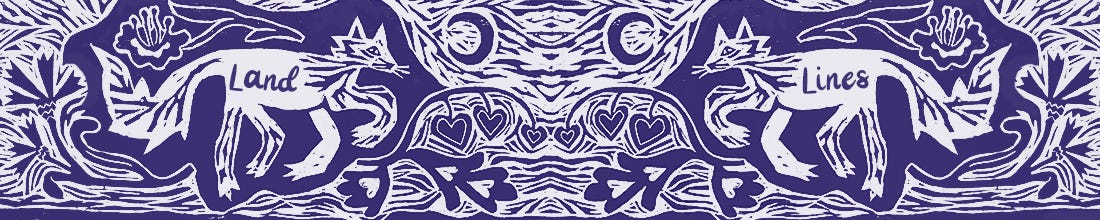
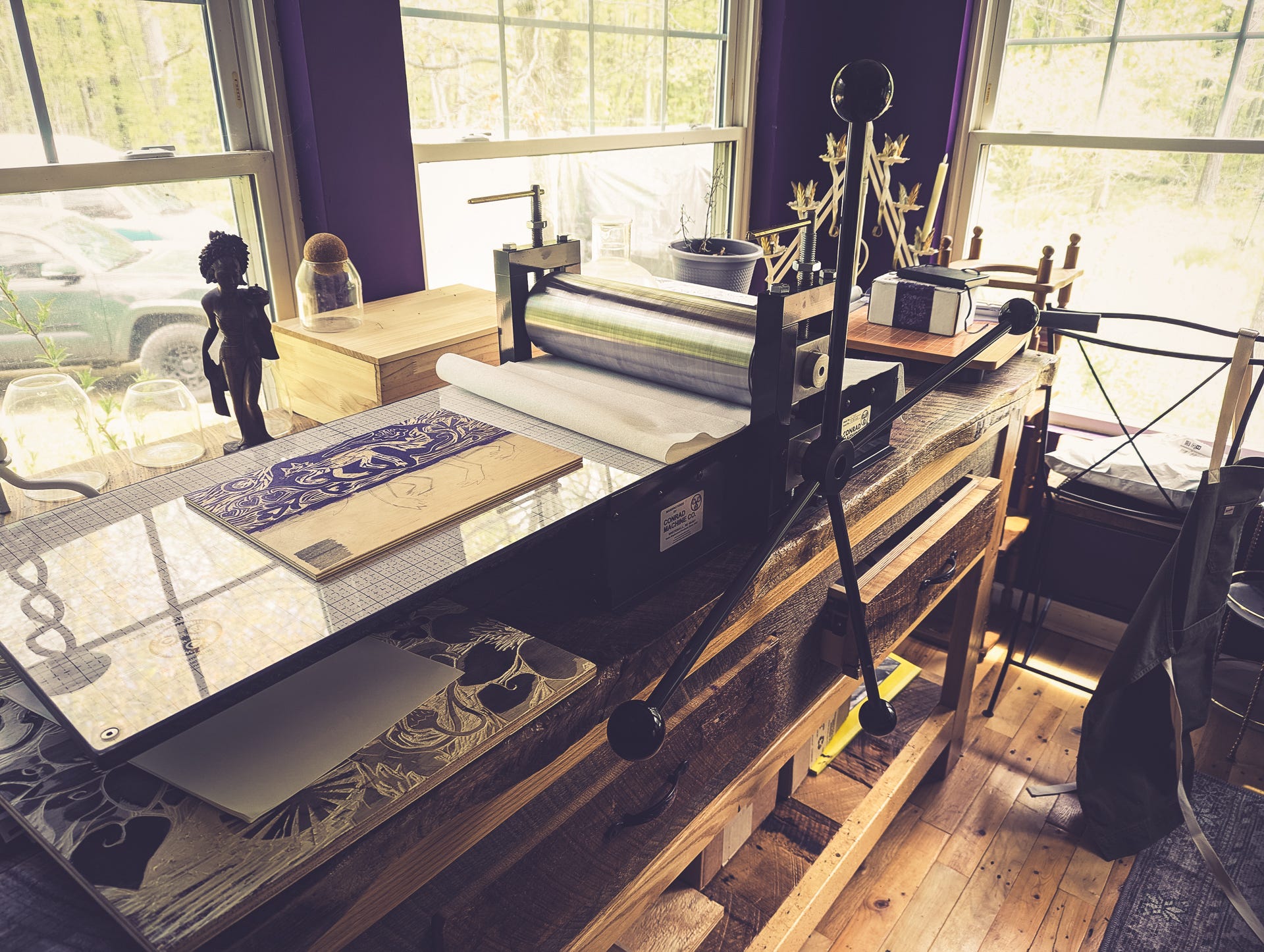
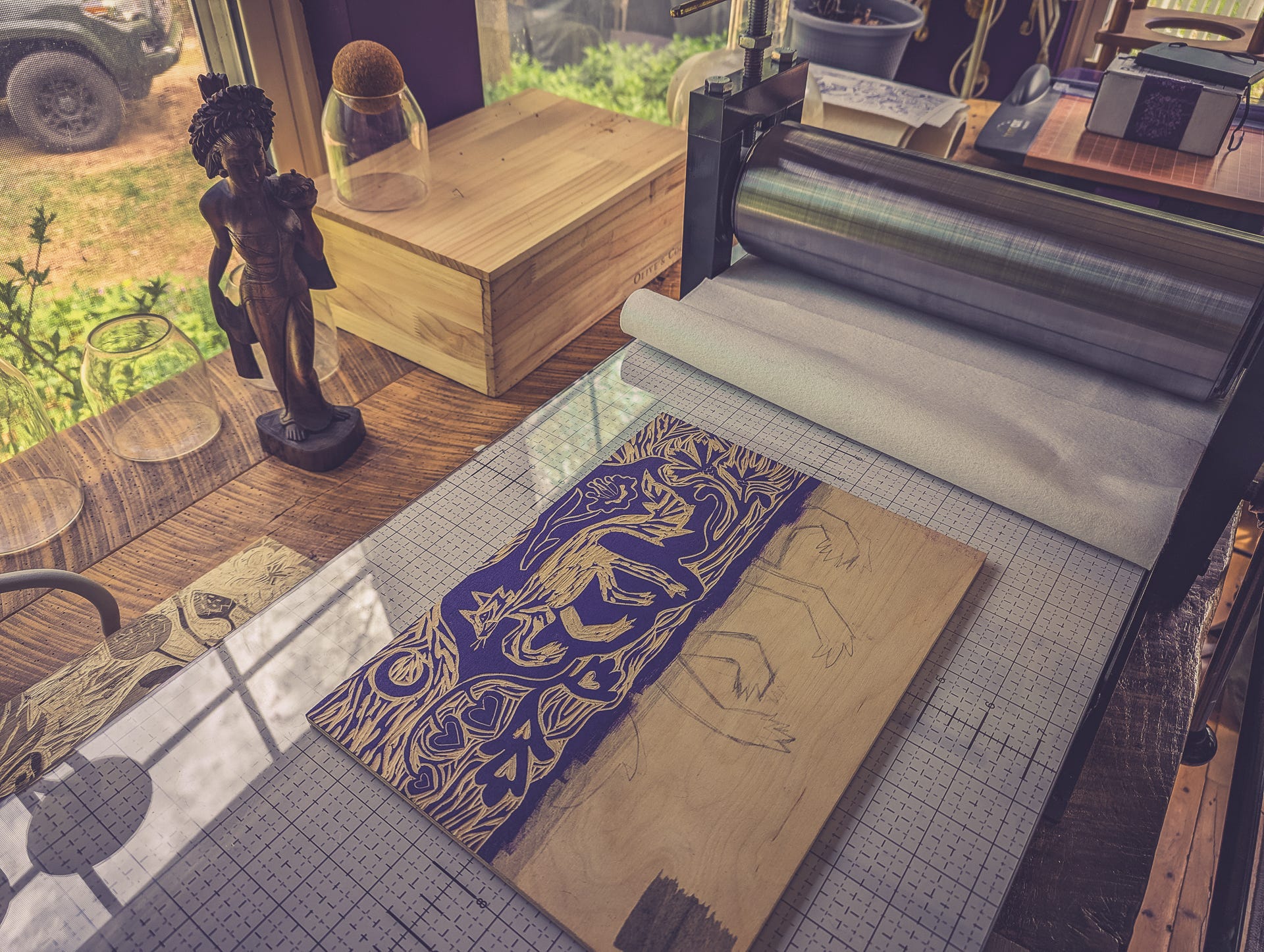
Some woodcut images I’ve been working on for the new look:

Much love,
Val
P.S. Feel free to share, it’s much appreciated!
I agree, I think one of the most important things about our existence is to connect.
I miss real land lines, that would work even when the power went off. And talking on the phone.
The foxes are beautiful!
Thank you for your writing.
I still have a land line and I use it almost daily. One daughter prefers to call me on the land line. She's says it's a better connection!!!
Indeed it is!